Where is the Pays des Pierres Dorées?
The Pierres Dorées (golden stones) villages lie in the south of the Beaujolais, on the doorstep of Lyon. Oingt, the best known, is about thirty kilometres from Lyon according to the Les Plus Beaux Villages de France association. The area is part of the Beaujolais UNESCO Global Geopark.
It is also called the Pays des Pierres Dorées. It is a land of hilltop villages, châteaux and vines, in a small area that is easy to cover by car in a day. The Beaujolais tourist office presents it as the southern gateway to the Route des Vins du Beaujolais.
- UNESCO Global Geopark: label awarded in 2018, renewed in April 2022 for four years.
- Geopark area: about 1,550 km² and 121 municipalities.
- On foot, by bike or by motorbike: the tourist office suggests all three ways to travel from one village to the next.
Why is the stone golden?
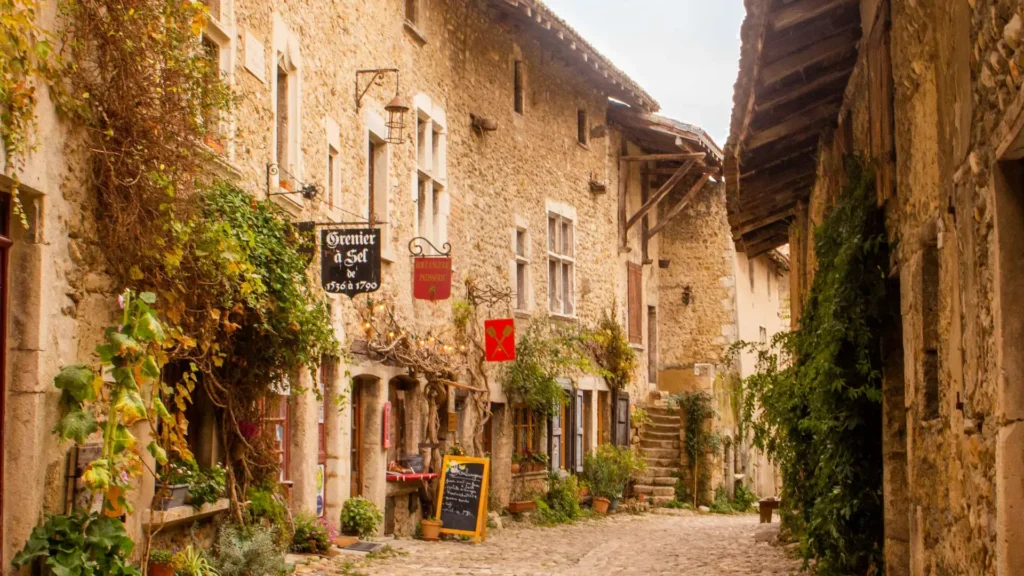
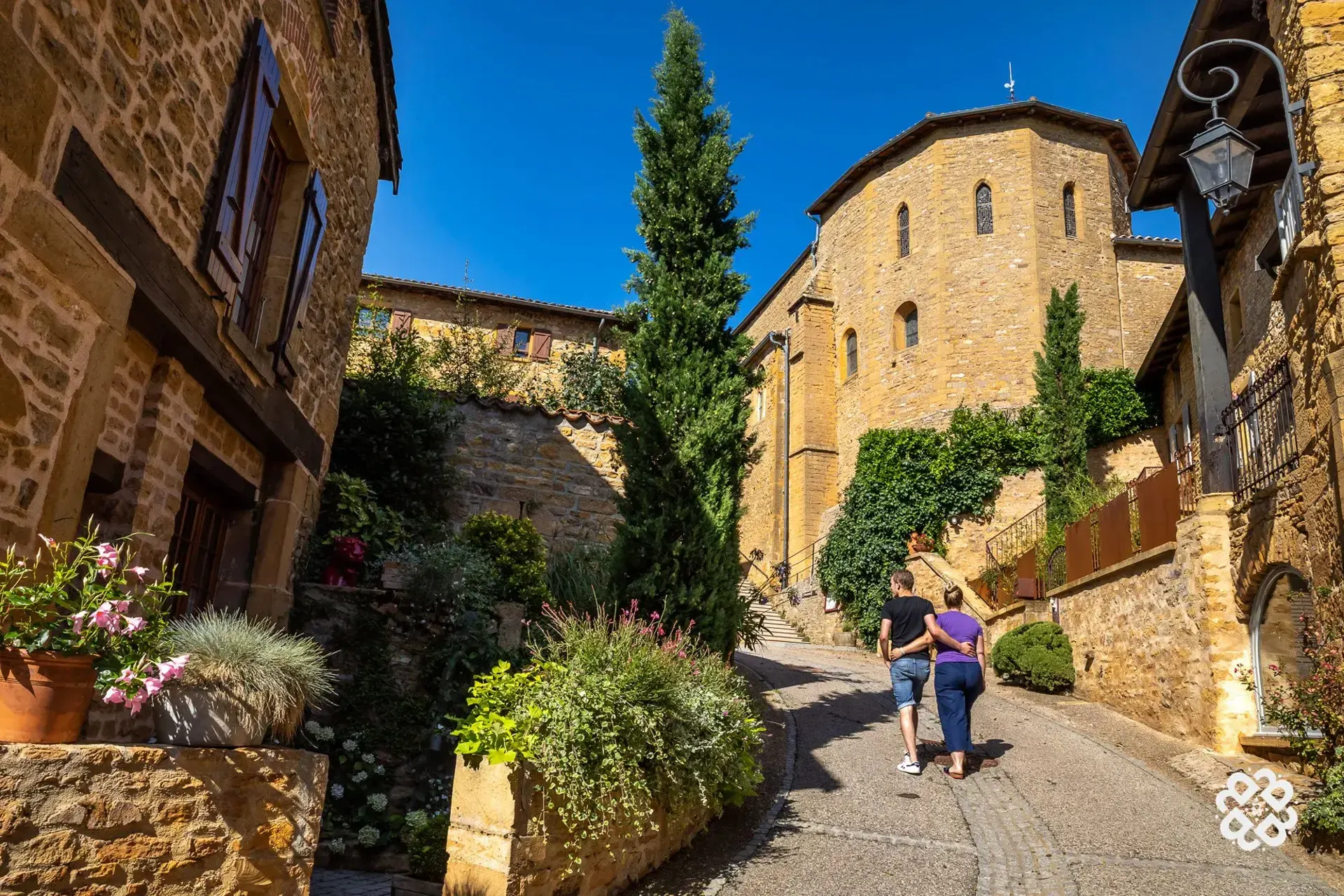
Pierre dorée is a crinoidal limestone. It owes its yellow colour to iron oxide and its sparkle to crinoids, small fossilised sea animals. It gives the façades of Oingt, Theizé and Jarnioux their warm tint at sunset.
The Beaujolais Geopark confirms that the walls of Oingt are built of “calcaire à entroques” (crinoidal limestone), known locally as pierre dorée. The Glay quarries were worked for about 500 years. They supplied building stone for the south of the Beaujolais and the Lyon area, because the stone is soft and easy to cut.
Its history follows that of the area:
- first the poor man's stone, a modest material;
- in the Renaissance, wealthy Lyon families sought it out;
- at the end of the 19th century, decline with the phylloxera crisis and the arrival of the railway;
- since the 1960s, renewed interest.
In Theizé, golden stone quarries were used in the 19th century to build many of the fine houses in the village and its hamlets.
A one-day itinerary through the Pierres Dorées villages
One day is enough to see seven Pierres Dorées villages: Charnay, Bagnols, Ternand, Oingt, Theizé, Jarnioux and Pommiers. Here is one possible loop, with Oingt in the middle of the day to make the most of its museums and view. You can take them in any order.
1. Charnay, the village on the ridge
- Village on a narrow ridge at about 450 m, rising more than 200 metres above the surrounding area.
- Château of the canon-counts, probably built in the early 11th century. Its western part, the “Mansarde”, houses the town hall.
- Saint-Christophe church, listed as a historic monument in 1974, with a 13th-century statue of Saint Christopher.
2. Bagnols and its château
- Château begun in the 13th century and heavily altered in the 15th and 18th centuries.
- Historic monument since 1926.
- It is now a luxury hotel: admire it from outside if you are not staying there.
3. Ternand, above the Azergues
- Village on a rocky spur across the Azergues valley, with a rampart walk facing the valley.
- Ruins of a 12th-century castle, a stronghold of the archbishops of Lyon, destroyed in 1562 by the troops of the Baron des Adrets.
- Church with Carolingian-era frescoes.
4. Oingt, one of the Plus Beaux Villages de France
Oingt is the only village in the Rhône listed among Les Plus Beaux Villages de France (Most Beautiful Villages of France), according to the Beaujolais tourist office. Allow time to wander its lanes.
- 12th-century tower: it houses the Musée de la Tour, devoted to the village's history. At the top, a terrace with a viewpoint indicator and a 360° view.
- Musée de la Musique mécanique et de l'Orgue de Barbarie: more than 60 instruments.
- Maison du Terroir des Pierres Dorées: wine tasting.
- Geopark micro-adventure no. 10, “Un village au cœur d'or”: a 6.4 km loop with 210 m of ascent.
5. Theizé, land of châteaux
- Château de Rochebonne, razed during the Hundred Years' War and rebuilt in the 17th century.
- Château de Rapetour, mentioned by the tourist office.
- Former church with a Romanesque nave from the 12th and 13th centuries and a Flamboyant Gothic choir dated 1536.
6. Jarnioux and its golden stone château
- Château built between the 13th and 18th centuries, dominated by a large keep-like tower.
- All its buildings are in golden limestone: one of the last examples of a residence built entirely in this stone.
- According to the French Heritage Society, it is open to the public at weekends from May to October.
7. Pommiers, between vines and the Saône
- Saint-Barthélemy church, recorded by the Île Barbe abbey as early as 1183. Its present choir was rebuilt from 1469.
- 19th-century Buisante chapel, overlooking the Saône valley.
- 320 hectares of vines in the municipality, south of Villefranche-sur-Saône.
Pays d'art et d'histoire and Geopark: two useful labels for your visit
The Beaujolais holds the Pays d'art et d'histoire (Land of Art and History) label and is a UNESCO Global Geopark. The first offers tours led by a qualified guide, the second offers trails on geology. Both help you understand what you see in the villages.
- Pays d'art et d'histoire tours: the tourist office lists guided tours that can be booked online, including in Oingt, Theizé, Villefranche, Salles-Arbuissonnas and Vaux-en-Beaujolais. Programme on beaujolais-tourisme.com.
- Geopark micro-adventures: free walk guides, including one for Oingt. Details on geopark-beaujolais.com.
Which wines to taste in the Pays des Pierres Dorées?
Here you taste Beaujolais wines right next to the vines. The Pays des Pierres Dorées opens the Route des Vins du Beaujolais from the south. In Oingt, the Maison du Terroir des Pierres Dorées offers tastings.
The Geopark trail in Oingt also stops at the Vignerons des Pierres Dorées. Pommiers has 320 hectares of vines. For a meal, the page where to eat near the house lists our favourite places around the Monts d'Or.
Setting off from Saint-Cyr-au-Mont-d'Or
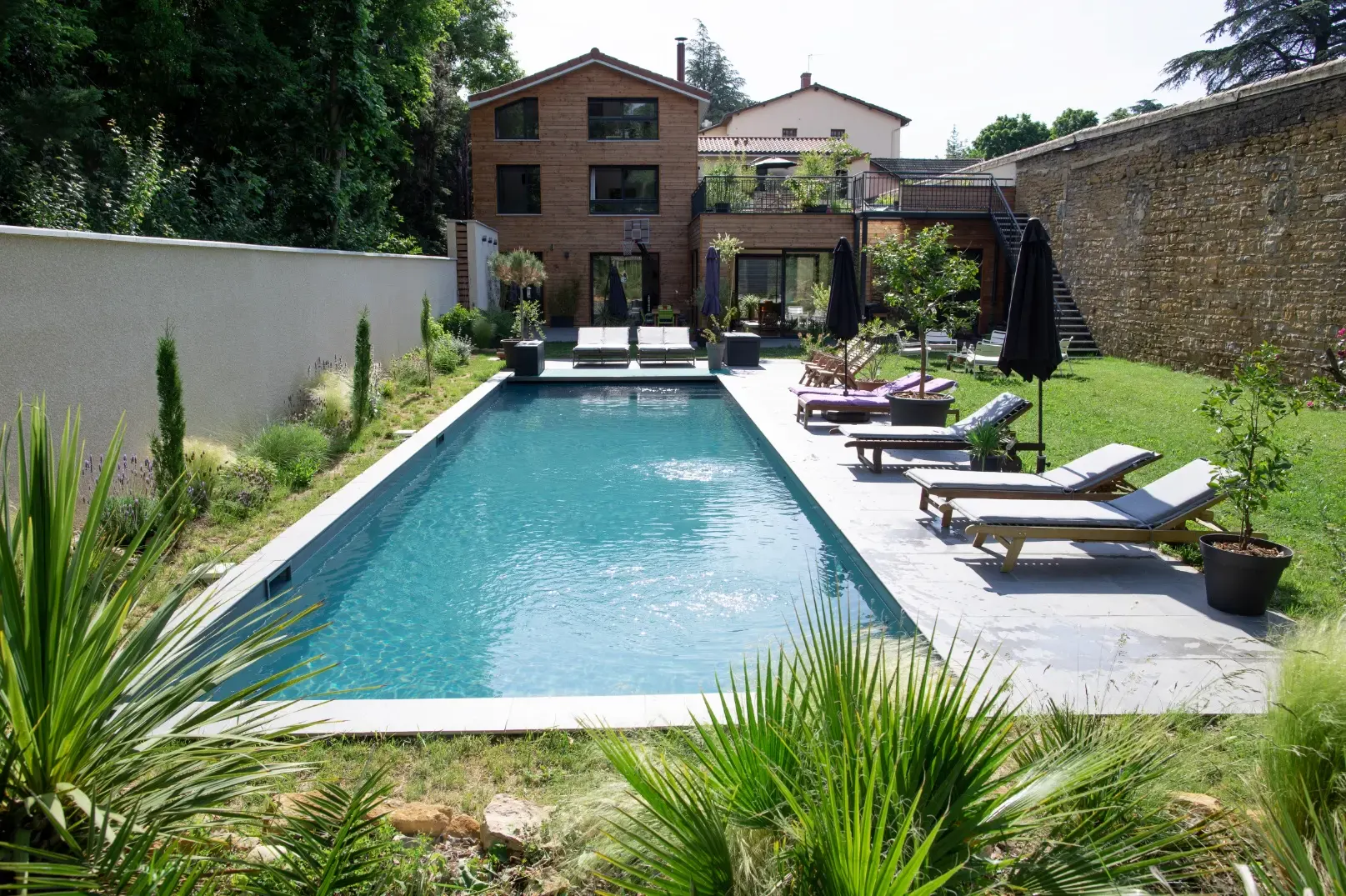
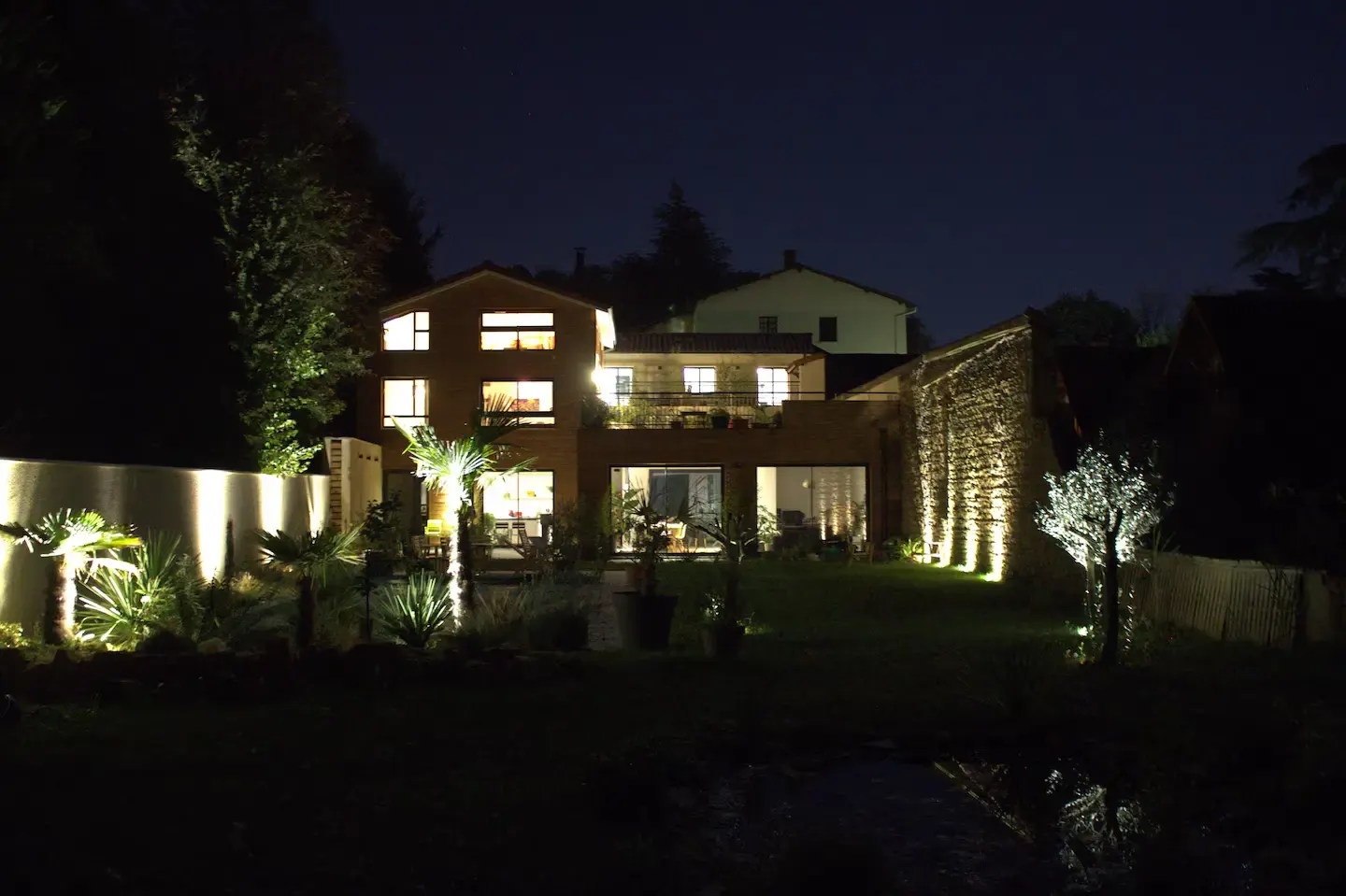
Effet Lodge is in Saint-Cyr-au-Mont-d'Or, at the foot of the Monts d'Or, 8 km from the centre of Lyon and north of the city. For a day in the Beaujolais, you set off from the house with your car parked on site.
- 4 private parking spaces on site, and free parking in the street.
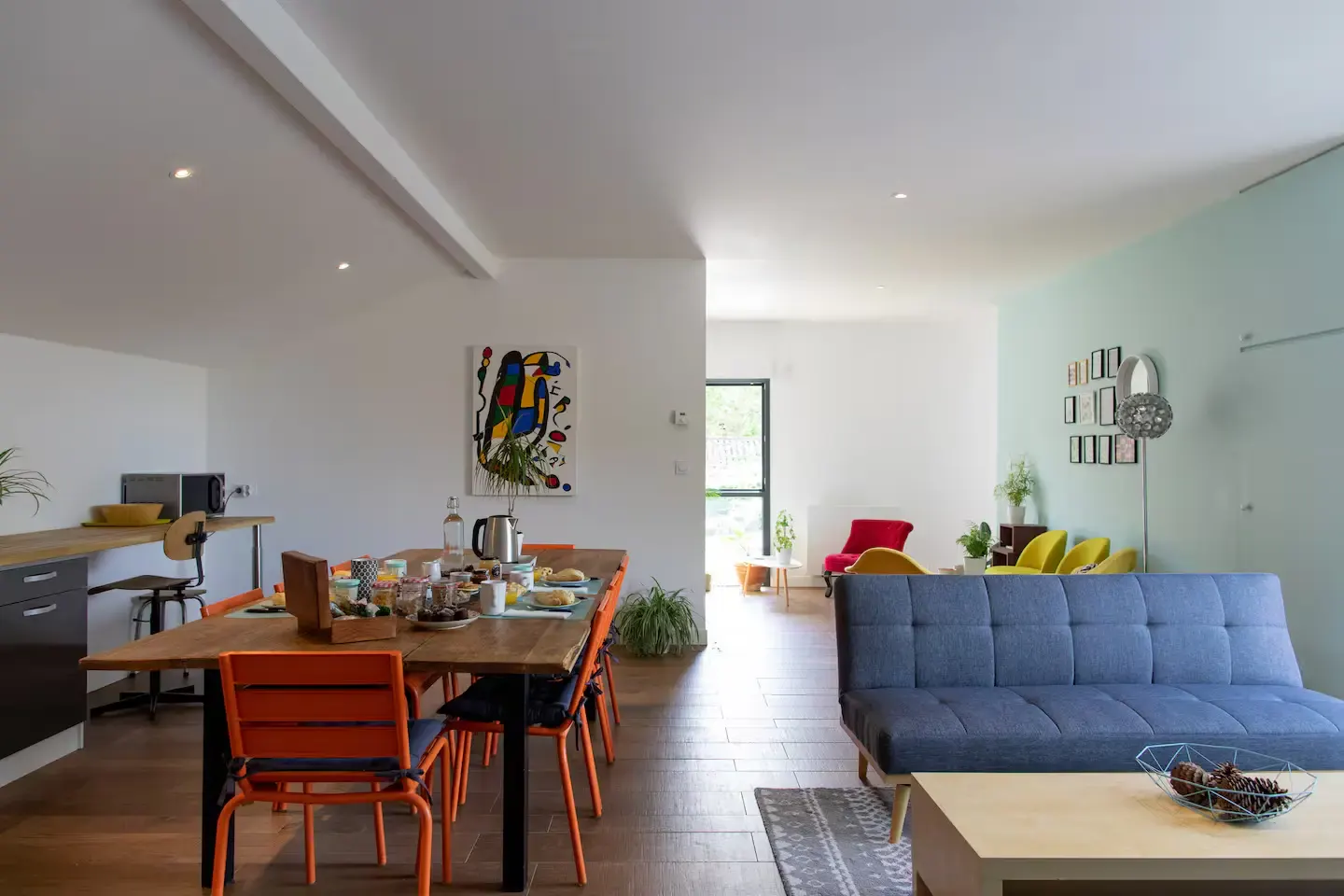
- Homemade breakfast before you leave: pastries, fresh bread, homemade jams.
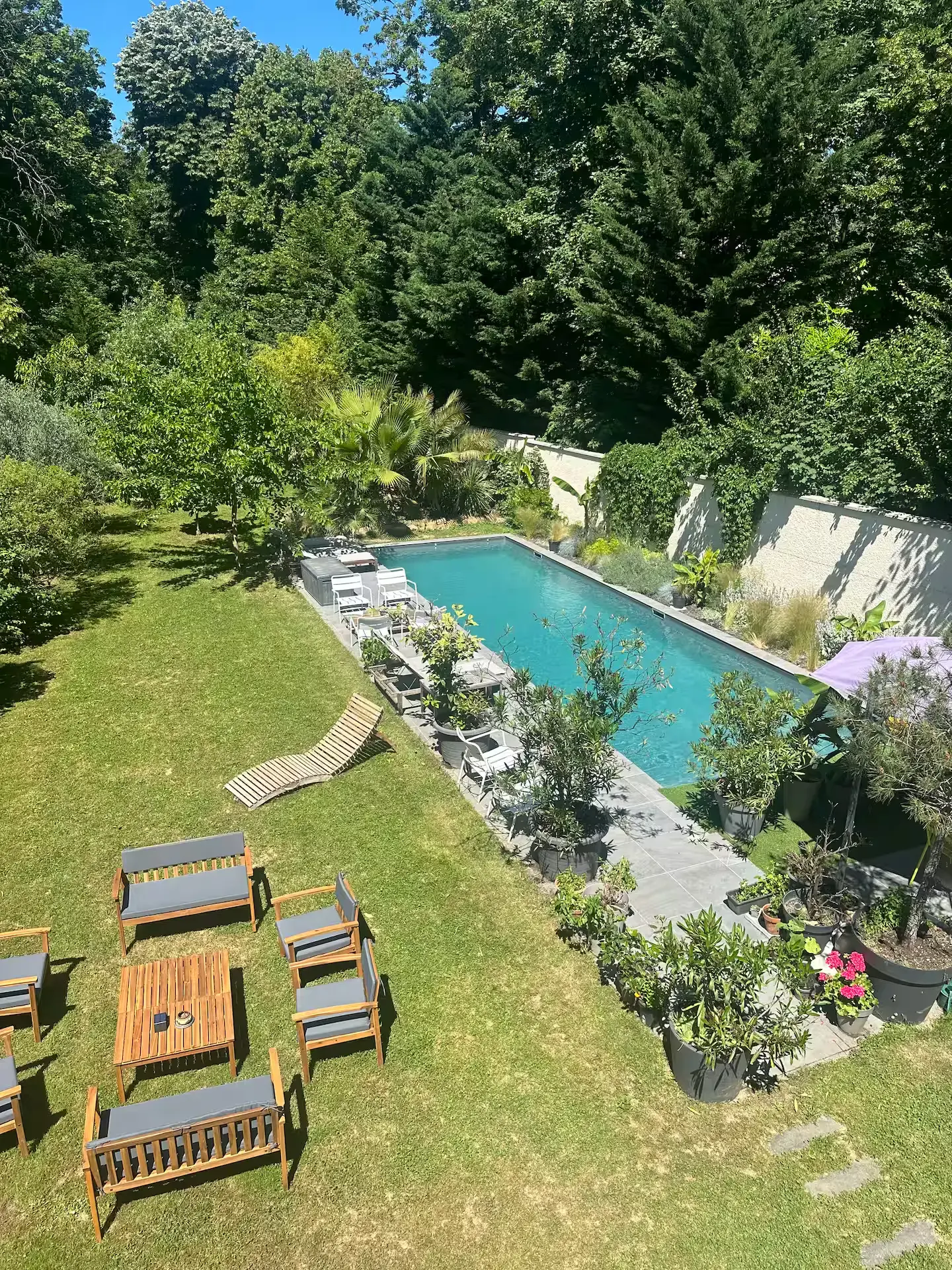
- When you get back, the solar-heated pool, from spring to September depending on the weather.
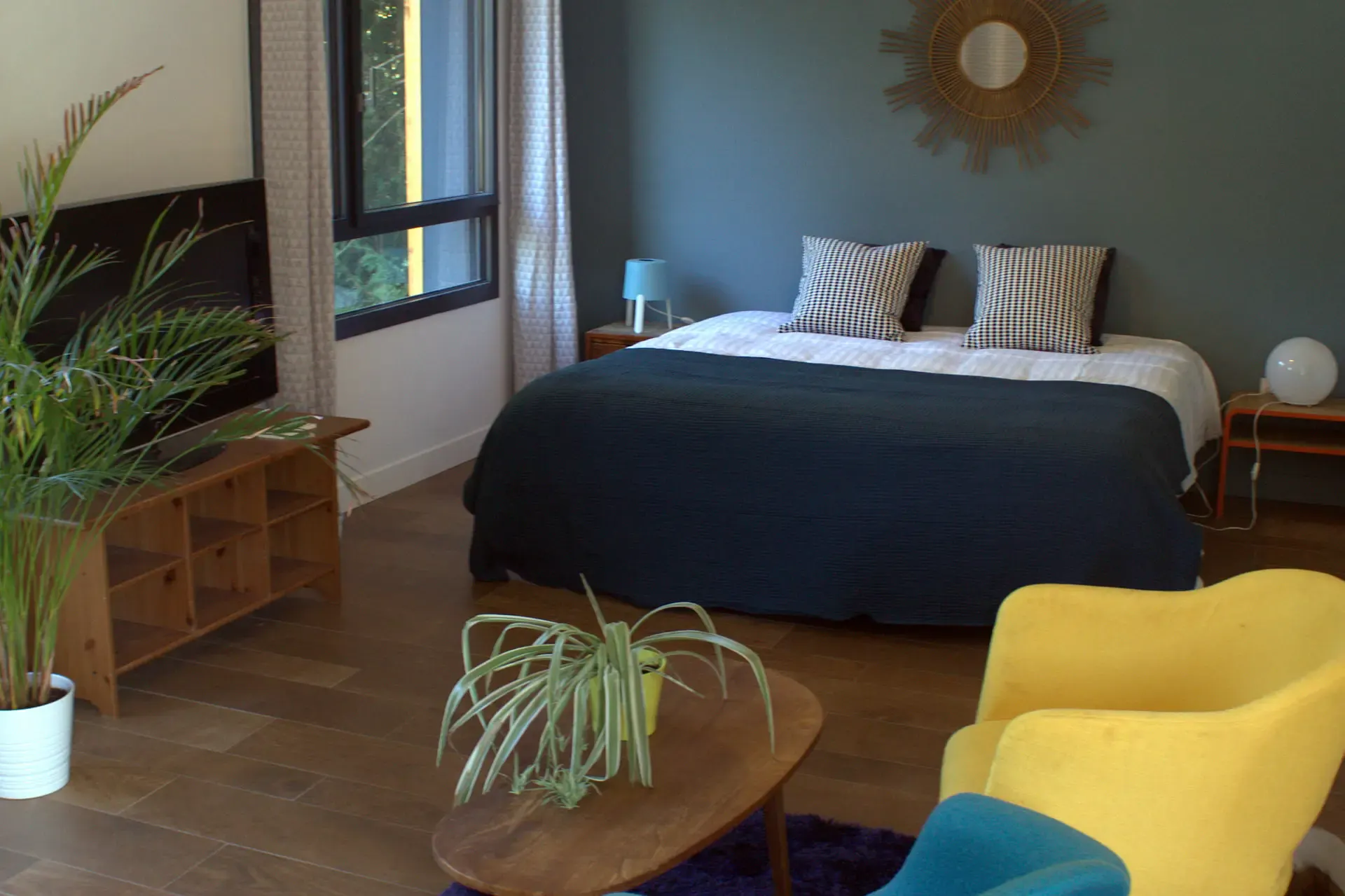
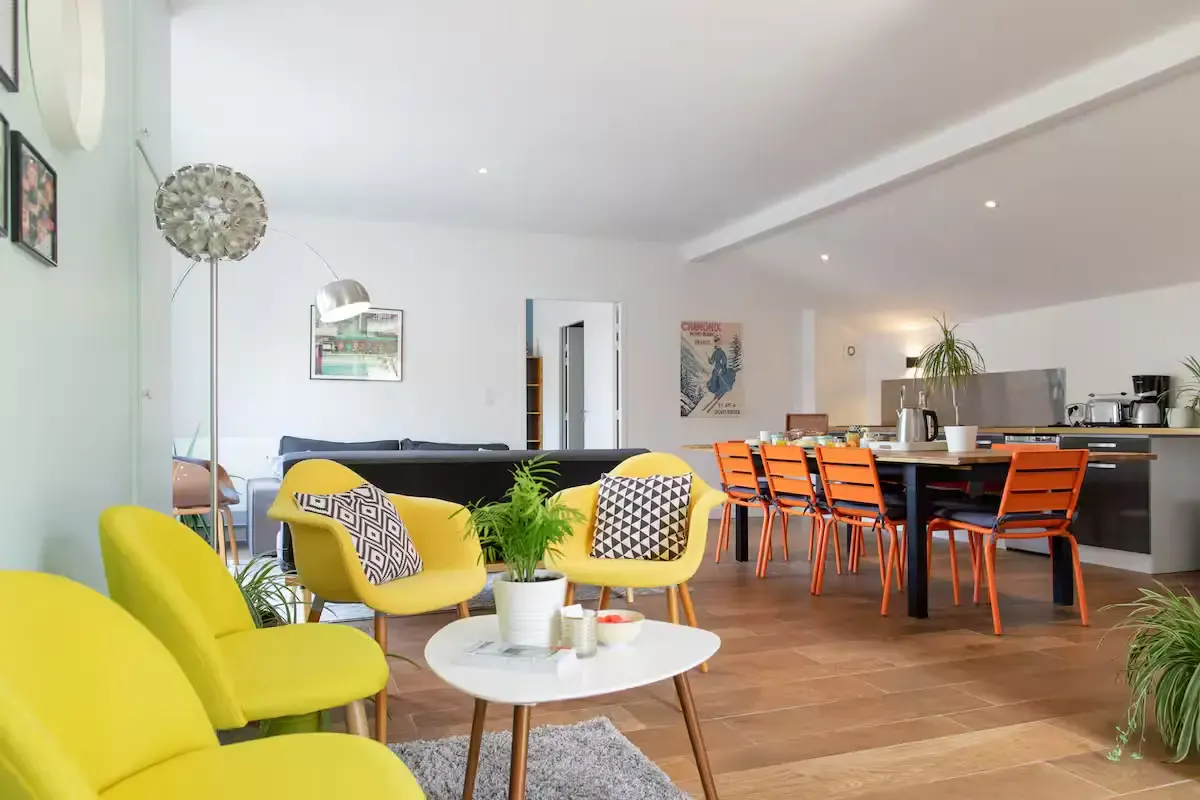
Choose between our guest rooms with pool and the 115 m² gîte for 6 people. The villages also feature on our page walks around Lyon, along with the Île Barbe and the Monts d'Or. For more ideas, read day trips from Lyon.
FAQ
Which is the most beautiful Pierres Dorées village?
Oingt is the only village in the Rhône listed among Les Plus Beaux Villages de France. The terrace of its 12th-century tower offers a 360° view.
Why are they called golden stones?
The local crinoidal limestone contains iron oxide, which gives it its yellow colour. The fossilised crinoids make it sparkle.
Can you visit the Pierres Dorées villages in one day?
Yes. Charnay, Bagnols, Ternand, Oingt, Theizé, Jarnioux and Pommiers can be visited in a day by car, leaving time for Oingt and a tasting.